

Things should be made as simple as possible, but not any simpler.
Albert Einstein

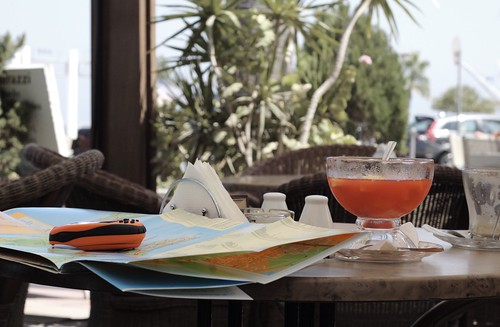
Why you take photograph? What you photograph?... and so on.
When people have too much time on their hands, they usually Simpsonize themselves.





With the US the US current accounts deficit approaching $800 billion for 2007 and the dollar continuing to fall against other currencies (for example, a Canadian dollar is worth $0.951 US dollars at this writing), the US cannot afford for international demand for the dollar to fall.
One guaranteed source of demand for dollar denominated assets is the petrodollar system, under which anyone buying oil from an OPEC member must buy it using US dollars.
This creates a guaranteed market for dollars and allows the US to run current accounts deficits (i.e. to import more than it exports every year). In fact, rising oil prices allow the US to run larger deficits, since oil importing countries must spend more on the oil they buy.
Into this milieu, Iran is escalating its dollar counter-hegemony by reducing its dollar reserves and asking Japanese buyers to start paying for its oil in yen instead of dollars.
Cruftiness is the quality of having cruft. Cruft is the stuff that accumulates on code over time. Cruft has no odor, but it stinks. Cruft has no mass, but it weighs the code down. Cruft can't be seen, but it's ugly. Cruft cannot be young, it's always old. Cruft can't be deliberately added, it only appears when you're not looking. Cruft can't be explained to managers, except through awkward car analogies. They still won't get it because managers drive well-maintained elegant foreign cars like BMW's, which gather no cruft. Programmers understand, because their Fords and Chevys are practically built of cruft. Harley motorcycles should have cruft, but noise dissipates cruft. Cruft is mysterious.
Cruft is never present on code which hasn't had enough work. Cruft only appears on code which has been worked too long, by too many people.
Feel free to republish these and add your own questions, or send additions to us at editor@eff.org.
The RIAA and MPAA trot out their spokespeople at conferences and public events all over the country, repeating their misleading talking points. Innovators are pirates, fair use is theft, the sky is falling, up is down, and so on. Their rhetoric shouldn't be given a free pass.
To that end, EFF has prepared a sample list of tough questions for times when you hear entertainment industry representatives speaking and want to challenge their positions. Asking hard questions is a way of "keeping honest people honest" and revealing when they're actually being deceptive. Feel free to republish these and add your own questions, or send additions to us at editor@eff.org.
Music
1. The RIAA has sued more than 20,000 music fans for file sharing, yet file sharing continues to rapidly increase both online and offline. When will you stop suing music fans?
2. The RIAA has sued over 20,000 music fans for file sharing, who have on average paid a $3,750 settlement. That's over $75,000,000. Has any money collected from your lawsuits gone to pay actual artists? Where's all that money going?
3. The RIAA has sued over 20,000 music fans for file sharing. Recently, an RIAA representative reportedly suggested that "students drop out of college or go to community college in order to be able to afford [P2P lawsuit] settlements." Do you stand by this advice? Is this really good advice for our children's futures?
4. The RIAA said that it only went after individual file sharers because you couldn't go after P2P system creators. After the Supreme Court's Grokster decision, shouldn't you stop going after music fans?
5. Major entertainment companies have repeatedly brought lawsuits to block new technologies, including the VCR, Digital Audio Tape recorders, the first MP3 player, the ReplayTV PVR, and now P2P software. Why is your industry so hostile to new technologies?
6. DRM has clearly failed[PDF] to stop songs from getting on file sharing networks, but it does prevent me from moving lawfully purchased music onto my iPod and other portable devices. Unlike the major record labels, many popular indie labels offer mp3 downloads through sites like eMusic. Why won't you let fans purchase mp3s as well?
7. The RIAA says that it doesn't mind if I rip CDs to my personal computer and put them on my iPod. Do I need your permission to do this or can I legally do it even if you object?
8. Recording off the radio is clearly permitted by copyright law and something Americans have done for over 25 years, but the RIAA supports legislation restricting devices that record from digital radio. Why are you against TiVo for radio?
9. Sony BMG recently implemented a DRM technology that damaged users' computers. But for independent researchers' analyses, this serious flaw may have gone undiscovered. After this scandal, will record labels allow any computer scientist or security expert to examine these products and agree not to sue them under the DMCA?
Video
1. The major movie studios have been enjoying some of their most profitable years in history over the past five years. Can you cite to any specific studies that prove noncommercial file sharing among fans, as opposed to commercial DVD piracy, has hurt the studios' bottom line in any significant way?
2. Is it legal for me to bypass CSS DVD encryption in order to skip the "unskippable" previews at the beginning of so many DVDs? Why should I have to be forced to watch these ads when I already bought the DVD?
3. Is it legal for me to skip the commercials when I play back time-shifted TV recordings on my TiVo or other PVR? How is this different than getting up and going to the bathroom?
4. Why are there region-code restrictions on DVDs? How does this prevent copyright infringement? Is it illegal for me to buy or and use a region-free DVD player, or to modify a DVD player to be region-free?
5. In several lawsuits, the MPAA has repeatedly said that it's illegal to make a back-up of a DVD that I purchased. Why is this illegal?
6. Is it ever legal for me to use software like DVD Shrink or Handbrake to rip a digital copy of a DVD I own onto a video iPod or my laptop? What if I want clips to use for a class report? Or if a teacher wants to include a clip in a PowerPoint slide?
7. Is there anything illegal about copying TV shows I’ve recorded off the air onto my video iPod?
8. If the MPAA-backed "broadcast flag" bill passes, I won't be able to move recorded TV content digitally to my current video iPod. Why should TV studios get to take away my ability to lawfully time- and space-shift?
9. Major entertainment companies have repeatedly brought lawsuits to block new technologies, including the VCR, Digital Audio Tape recorders, the first MP3 player, the ReplayTV PVR, and now P2P software. Why is your industry so hostile to new technologies?
10. Hollywood is pushing legislation to "plug the analog hole". These restrictions won't keep copyrighted video off of file sharing networks, but they will block me from excerpting a recorded TV show for a school report or using tools like the Slingbox to send recorded TV shows to myself over the Internet. Why are you trying to restrict these legitimate uses?
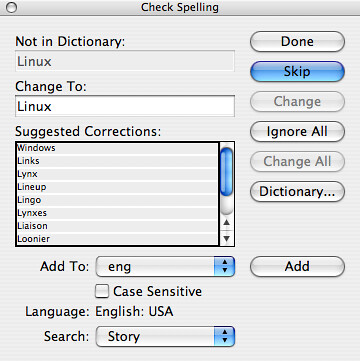
Suggested corrections: Windows?! WTF?
This was found in Adobe InDesign CS3 on Mac OS X while spell checking my resume



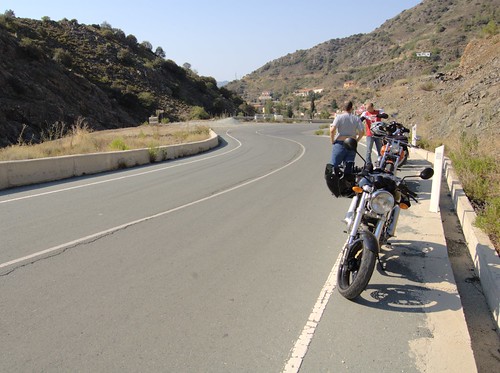
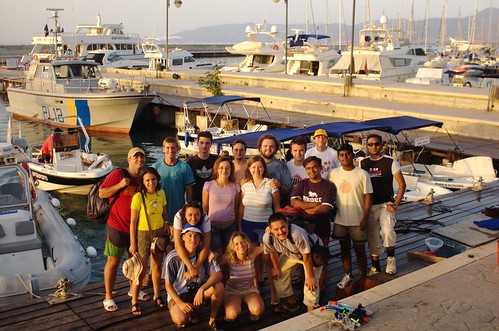
During this trip I am going to see Cappadocia in central Turkey, mount Ararat on the far east of Turkey and Istambul. I also want to swim in all three seas which are on my way: Mediterranean,Black and Baltic Sea. My plans are to spend one week in Turkey and spend one week travelling to Poland where I am going to meet my friends and family and ofcourse swim in Baltic sea. Then I will go back to Cyprus. Hopefully everything will go fine and will return safely, but I don't excpect that everything will goes according to my plans;) This is never like that...and this is what makes adventure interesting;)





To be successful, Re-Mission had to be biologically accurate, meaningful to young people with cancer, and fun. HopeLab adopted a highly interactive, rationally engineered development process to create Re-Mission, working with cancer experts, cell biologists, psychologists, game developers, and young people with cancer. The result is an engaging, high-quality game in which players pilot a nanobot, Roxxi, through the bodies of fictional cancer patients to destroy cancer cells, defend against bacterial infections, and grapple with often life-threatening cancer-related side effects and challenges common among young people with cancer.
HopeLab conducted an unprecedented randomized, controlled trial (our Outcomes Study) to test the effect of Re- Mission on key health-related outcomes among adolescents and young adults with cancer. Study results indicate playing Re-Mission produced statistically significant increases in quality of life, self-efficacy, and cancer- related knowledge for adolescents and young adults with cancer. Young people who played Re-Mission also maintained higher blood levels of chemotherapy and showed higher rates of antibiotic utilization, demonstrating that Re- Mission helps patients adhere to cancer therapy regimens.





We apologize the site you are attempting to visit has been blocked due to its content being inconsistent with the religious, cultural, political and moral values of the United Arab Emirates.


Skin-to-skin contact with the father is "optimal for the infant's well-being when the mother and infant are separated after a cesarean birth," the researchers conclude.




Subject carbonite transport device
From Boba Fett <backpacksgotjets@bountyhunters.com>
Date A Long Time Ago 3:17 PM
To Nardo Pace <npace@empiremail.com>
I am currently transporting a bounty that has been frozen in carbonite with a device you created. I have been told to direct any questions or comments I might have your way.
This is obviously a new technology, but might I suggest adding a few security measures to the transport device's control panel? Right now anyone can walk up to this thing and flip a few switches to release the frozen prisoner. I'm thinking a number pad with a secret code would be great, or heck, even a plain old key.
Just a friendly suggestion. Oh, and thanks for the modifications you made to my rocket pack. That "ignition" button square on the back of the pack where I can't reach it is great.